
Invisalign London: Treatment, Timelines & What to Expect
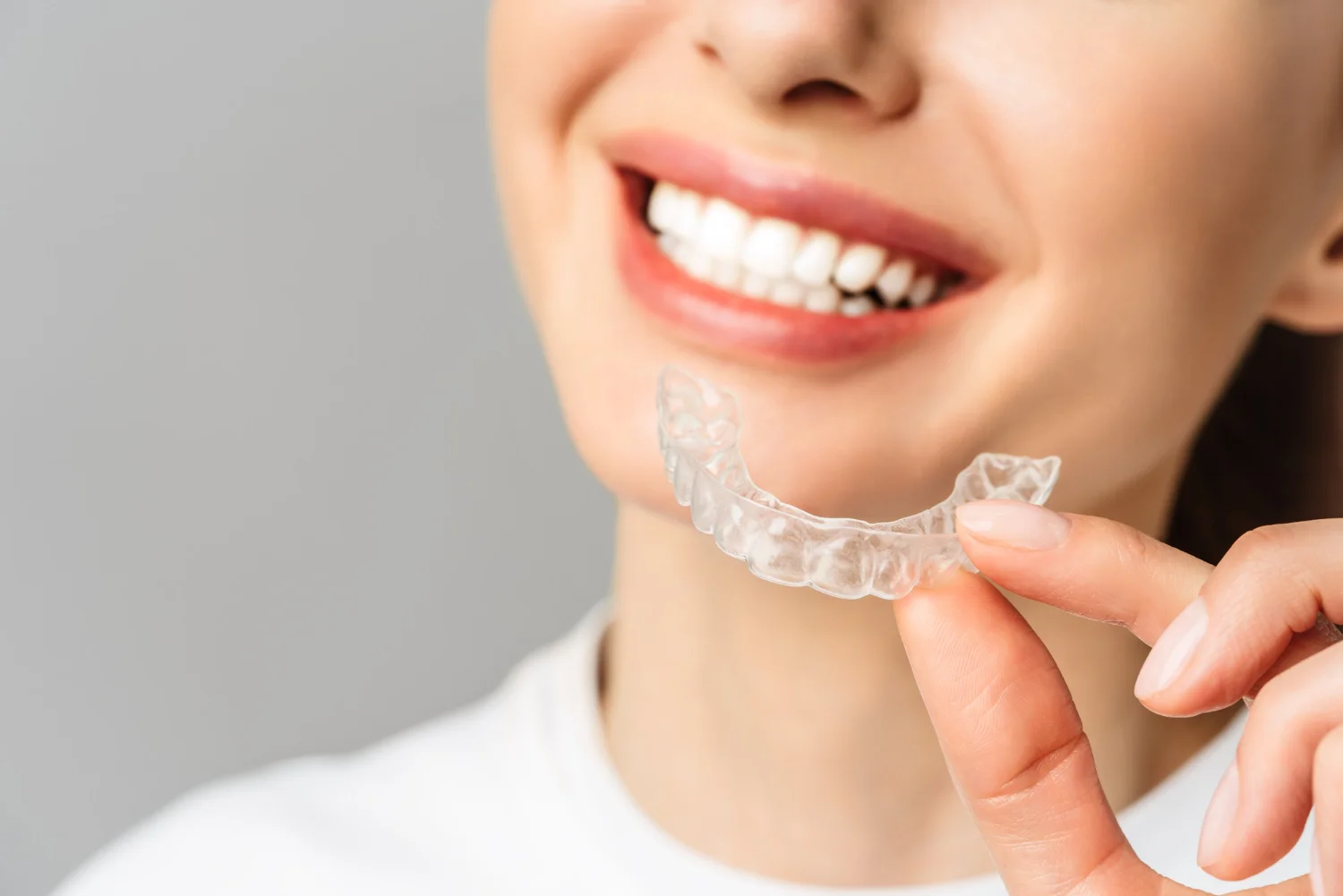
You have decided on Invisalign. What you probably haven’t found is a straight account of what the treatment actually involves.
Clinic pages offering Invisalign in London tend to lead with offers, packages and galleries of finished cases. Useful for choosing a practice. Less useful when you want to know what happens, in what order, and how long it runs.
This guide sets out the stages, the honest timings, and what holds the result afterwards.
Invisalign in London: What the Treatment Involves
Invisalign moves teeth with a series of clear plastic trays, each shaped slightly differently from the last. You wear a tray for about a week, then swap it for the next. Every change applies gentle pressure to a few teeth at a time, and across the series the teeth travel to the planned position. The trays come out for meals and for brushing. That is the whole mechanism: no brackets, no wires, no tightening appointments.
What makes it work is wearing it. Anyone choosing Invisalign in London is taking on a treatment they run themselves between appointments. Our guide to what Invisalign braces are covers the system in more detail.
How the Aligners Actually Move Teeth
Teeth sit in bone, and bone remodels under sustained light pressure. A tray holds a tooth slightly out of position, the bone on one side breaks down while it rebuilds on the other, and the tooth follows. Small tooth-coloured attachments are bonded to some teeth to give the tray something to push against where a movement needs more grip.

Invisalign Braces London: How Clear Aligners Compare
Invisalign is a brace in the sense that it applies force to move teeth, but not a fixed one. That difference decides most of what follows. Choosing Invisalign braces in London means choosing an appliance you control over one that never comes out.
| Clear aligners | Fixed braces | |
|---|---|---|
| Visibility | Barely noticeable | Visible, or tooth-coloured |
| Removable | Yes, for eating and cleaning | No |
| Working when | Worn at least 20 hours daily | Always |
| Strongest on | Mild to moderate crowding and spacing | Complex bite correction |
| Finishing | Quicker on comparable cases | Finer control at the end |
A systematic review in BMC Oral Health found aligners finished comparable cases faster, but less reliably on fine detail such as tooth torque and bite contacts. Our Invisalign against braces comparison sets the two side by side.
What You Give Up & What You Gain
You give up an appliance nobody can take out. You gain normal eating, proper cleaning, and a few hours without the trays when it matters. For most adults that trade is worth making. For a case that needs the bite rebuilt, it is not.
Invisalign Treatment London: The Step-by-Step Process
Invisalign treatment in London follows the same sequence at any practice worth using. The order matters, because each step depends on the one before it.
- Assessment and records. A full examination, photographs and x-rays. Critical x-rays have to be taken before anything is planned, because the bone and the roots decide what is possible.
- Digital scan. An intraoral scanner replaces impressions and builds a three-dimensional model of the teeth.
- The treatment plan. That scan drives a ClinCheck plan, a simulation showing each tooth’s path and its finished position.
- Fitting. Attachments are bonded where the plan needs them, and the first trays are handed over.
- The series. You change trays roughly every week at home, with short reviews every six to ten weeks.
- Refinement and retention. If a tooth has not tracked, extra aligners correct it, and retainers hold the result.
Our Invisalign page sets out how each stage runs in practice.
How Long Does Invisalign Take?
On average, treatments are completed in four to six months. That surprises people who expect years, but most adult cases need limited movement.
Simple cases. Mild crowding or a single front tooth out of line can finish inside a few months.
Most cases. Four to six months, on the sort of case that walks through the door.
Complex cases. Where the bite itself has to change, treatment runs longer, and a fixed appliance is sometimes better.
Helpful Tip: Wear time moves the timeline more than anything else. The trays only work while they are in, and the advice is at least 20 hours a day.
How long a case runs and what it costs move together, because both follow how far the teeth have to travel, and our guide to how much Invisalign costs sets out what changes each.
What Makes a Case Run Longer
Three things. How far the teeth have to move. Whether the bite needs correcting as well as the alignment. And compliance: a 2025 systematic review in Cureus found patient wear time to be the most critical determinant of the result. The first two are fixed on day one. The third is not.
Invisalign Consultation London: What Happens First
An Invisalign consultation in London should end with you knowing whether the treatment suits your teeth, not only what it would involve. Expect four things.
- An examination. Gums, existing fillings and crowns, and the state of the bite.
- X-rays. Root position and bone level, which no photograph will show.
- A scan or impressions. The record the plan is built from.
- A straight answer. Whether aligners will do the job, and what the alternative is if they will not. Our guide to teeth straightening in London sets out the other appliance families.
The General Dental Council is explicit that there is no effective substitute for a physical, clinical examination as the foundation for that assessment. That is why a postal or remote route is a different proposition, as our article on do-it-at-home teeth straightening explains.
What to Ask Before You Commit
Ask how many aligners the plan runs to, what happens if a tooth does not track, whether refinements are included, and what the retainer arrangement is afterwards. Those four answers separate a plan from a quote.
Is Invisalign Right for Your Teeth?
Aligners suit most adult cases and a good number of teenage ones. They are not universal.
Usually a good fit:
- Mild to moderate crowding
- Spacing and small gaps
- Teeth that have drifted after previous orthodontic work
- Adults who cannot wear a visible appliance at work
Often better served another way:
- Cases where the bite itself has to be rebuilt
- Teeth needing significant rotation, intrusion or extrusion
- Anyone who already knows they will not wear the trays
Expert Tip: Rotating a round tooth and pulling one down into the arch are the hardest movements to achieve predictably with aligners alone. It’s one of the things an assessment is looking for.
Age is not a factor. The British Orthodontic Society notes that orthodontics can be suitable for anyone who would like to improve their smile. Where Invisalign is not the answer, other aligner systems and fixed appliances are, and an assessment settles which.
Retainers: Keeping Your Teeth Straight After Invisalign
The trays finish. The teeth are where they should be. Left alone, they won’t stay there.
Why teeth move back. Retainers are essential in almost all cases to help prevent the teeth moving once the braces are removed. The fibres and bone around a tooth take months to settle in a new position, and until they do, the tooth wants its old one.
What holds them. A thin wire bonded behind the front teeth and a clear night-time retainer. Both, not one or the other.
Expert Tip: Retention is not a phase that ends. The British Orthodontic Society is explicit that if the retainers are not worn, the teeth go crooked again and the hard work of wearing the braces is lost.
How Long Do You Wear a Retainer?
Indefinitely, and that is not a sales line. Every night for the first year after treatment, then every other night after that. Wear it for as long as you want the teeth to stay put. A retainer is a small habit measured against the cost and the months of doing the whole thing twice.
Invisalign at TKC Dental in Kensington & Knightsbridge
Planning starts with a full examination and x-rays, so the plan follows what the bone and the roots allow. In our experience the cases that run to plan are the ones where wear time is non-negotiable. Scanning uses an iTero scanner, and the plan is built as a ClinCheck simulation. You see the intended finish before the first tray goes in. Refinement aligners come at no additional charge where a tooth needs bringing into line at the end. Both fixed and removable retainers follow, with a review at no extra cost six months after treatment finishes. Our teeth straightening page sets out the full range.
TKC Dental’s clinics in Knightsbridge and Kensington are conveniently located just 2 miles from the world-renowned Harley Street.
Frequently Asked Questions – Invisalign
These are the questions patients ask most often before starting Invisalign in London. They cover timings, comfort, eating, appearance and what happens once the trays come out.
Invisalign London: What to Remember
Invisalign is straightforward to describe and demanding to run. The trays do the work, but only while they are in.
The short version:
- What it is: a series of clear removable trays, changed weekly
- The sequence: records, scan, ClinCheck plan, trays, refinement, retainers
- Typical timeline: four to six months
- What decides suitability: how far the teeth move, and whether the bite has to change
- What holds it: retainers, worn indefinitely
An assessment turns all of that into a plan for your teeth specifically, because it shows which ones have to move and how far.
Information Sources
Direct-to-consumer orthodontics (General Dental Council)
Retainers and relapse (British Orthodontic Society)
Orthodontics for adults (British Orthodontic Society)
Clear aligners against fixed appliances (BMC Oral Health)
Predictability and success of Invisalign aligners (Cureus)
Contact Our Team Today
Whether you are weighing up clear aligners, wondering how long treatment would take, or unsure whether your case suits trays at all, complete the short form below. Our team will get back to you promptly to talk through your concerns and arrange a private consultation at a time that suits you.
TKC Dental provides Invisalign and Smartee aligners alongside lingual, ceramic and fixed braces, so the plan suits your case rather than one system. Interest-free payment options help make treatment accessible. You can enquire today and our team will provide honest, personalised guidance with no obligation.