
Dental Implants and Bone Grafts: Process, Cost & Recovery

A surprising number of UK adults considering dental implants find out at consultation that they need a bone graft first.
Dental implants and bone grafts often go together because the implant needs sufficient jawbone volume to anchor into. When bone has been reduced by tooth loss, gum disease, or resorption, a bone graft rebuilds the foundation.
This guide covers when grafting is needed, the four material types used in the UK, healing timelines, costs, and what specialist care looks like at each stage of treatment.
What Are Dental Implants and Bone Grafts?
Dental implants and bone grafts are two procedures that work together when bone volume cannot support an implant. A dental implant is a small post (titanium or ceramic/zirconia) placed into the jawbone. A bone graft adds bone material to a deficient area, restoring the volume needed to hold an implant in place.
The two are not always paired. Patients with healthy bone density often proceed directly to implant placement. Patients missing teeth for years or with advanced gum disease frequently need grafting first. The decision is made after a CT scan reveals bone volume at the implant site. Without enough surrounding bone, an implant will not osseointegrate reliably.
Expert Tip: Ask your dentist whether the CT scan is included in the consultation fee. At specialist implant practices, it usually is. The CT scan confirms bone volume before you commit to treatment.
When Do You Need a Bone Graft for Dental Implants?
You’ll need a bone graft for dental implants when the jawbone is too thin, too short, or too soft to support the implant on its own. Three groups are most at risk: patients with untreated tooth loss for six to twelve months, those with advanced gum disease, and long-term denture wearers.
The CT scan at consultation measures bone width and height at each planned implant site. Implants need at least 1.5 mm of bone on either side and 8-10 mm of vertical height. According to Cambridge University Hospitals NHS Trust, each patient is assessed for these bone requirements before implant placement. Sites below those thresholds need a graft before placement. Patients with active periodontitis may also need bone augmentation.
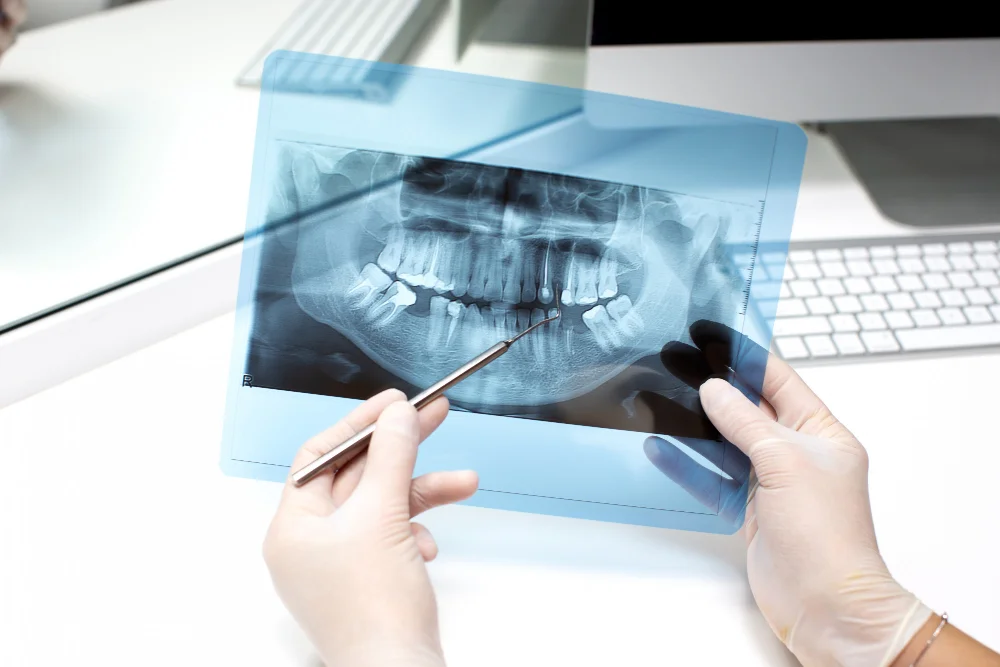
For dental implants with bone loss, the bone graft adds three to nine months to the overall treatment timeline because new bone needs to integrate before the implant can go in. In some cases, both can be placed in the same surgical visit.
Read more on the dental implants treatment page.
Types of Dental Bone Graft: Which Option Suits You?
A dental bone graft uses one of four material types. Your specialist will recommend the right one based on defect size and medical history.
Autograft (autogenous bone) uses the patient’s own bone, typically from the chin or jaw. Gold standard for integration; requires a second surgical site.
Allograft uses donated human bone, processed and sterilised from a tissue bank. It acts as a scaffold for the patient’s own bone to grow into.
Xenograft uses processed bovine bone with a mineral structure similar to human bone. Widely used in UK oral surgery for sinus lifts and ridge preservation.
Synthetic graft (alloplast) uses materials such as calcium phosphate or hydroxyapatite. No donor source makes it the lowest-risk option immunologically.
Helpful Tip: If cost is a factor, ask about allograft or xenograft. Both cost less than autograft while delivering reliable results for most defect sizes.
Dental Bone Graft Specialist: Why Periodontist Expertise Matters
A dental bone graft specialist is typically a periodontist, a dentist with three additional years of postgraduate training focused on the gums and supporting bone structures. Bone grafting sits at the intersection of periodontal surgery and implantology, and specialist expertise produces meaningfully better outcomes than generalist treatment, particularly for complex defects or compromised tissue.
Periodontists assess gum health, pocket depths, and existing bone loss before surgery, catching contraindications a general dentist might miss. They also handle the technical surgery itself, with training in membranes, sutures, and graft-placement techniques that determine whether new bone integrates cleanly. Their training in soft-tissue management is also critical for graft success.
For full-arch reconstructions like All-on-4 dental implants, the periodontist works alongside the implant surgeon to plan grafting stages so each phase supports the next, especially when sinus lifts or wider augmentations are involved.
Dental Implants & Bone Grafts: UK Cost Guide
A single dental implant combined with a minor bone graft in the UK typically costs £2,200–£4,400. Cases requiring a major graft, such as a sinus lift or ridge augmentation, typically fall in the £2,800–£6,000 range for the same tooth. Full-arch reconstructions are priced on a case-by-case basis.
What affects cost:
- Graft material: Autograft requires a second surgical site and adds surgical time, making it the most expensive option. Allograft and xenograft cost less while delivering reliable results for most defect sizes.
- Graft complexity: Minor ridge preservation costs less than a bilateral sinus lift or full ridge reconstruction.
- Number of implants: Combined treatment costs scale with the number of teeth being restored.
- Practice type: Specialist periodontist fees are higher than general dentist fees, reflecting the additional training and lower complication rates.
Finance plans are widely available for combined treatment. Most specialist implant practices offer monthly payment options; ask at your consultation.
Maximum Time Between Bone Graft & Dental Implant?
The maximum time between bone graft and dental implant placement is typically six to nine months, though the window depends on graft size, material, and healing factors. Bone tissue needs time to mature before it can carry an implant load, but waiting too long risks volume loss from natural remodelling.
For smaller grafts such as ridge preservation or sinus lifts, the implant can go in at three to four months. Larger augmentations need six to nine months. Immediate placement at the time of grafting is possible for small defects with intact bone, per PMC research on alveolar ridge preservation. Your specialist will time placement based on follow-up imaging.
Expert Tip: If you’re a smoker, plan to stop during the bone graft healing period. Smoking reduces blood supply to the graft site and significantly increases failure risk. Speak with your dentist about cessation support options before surgery.
Dental Bone Grafts in London: TKC Dental
Patients in central London have access to advanced bone grafting and implant placement through TKC Dental’s Kensington and Knightsbridge clinics. Both locations are staffed by specialist periodontists and implant surgeons, with on-site CBCT scanning and digital treatment planning streamlining the process from first consultation to final crown.
What we offer at TKC Dental:
- Specialist-led bone grafting with periodontist supervision
- On-site CBCT scanning and digital implant planning
- Titanium and ceramic/zirconia implant options under one roof
- Finance plans available across the combined treatment cost
If you’d like a specialist opinion on whether grafting is right for you, our team handles every stage from CT scan through treatment planning to final restoration. We’ve supported patients who were previously told elsewhere that implants weren’t possible.
Frequently Asked Questions – Dental Implants & Bone Grafts
Direct answers to the questions patients most often ask about dental implants and bone grafts.
Dental Implants & Bone Grafts: What You Need to Know
Dental implants and bone grafts are paired when natural bone volume cannot support an implant. The graft rebuilds the foundation; the implant follows once new bone has integrated. Most patients still receive a fixed restoration, just on a longer timeline.
The key things to remember about dental implants and bone grafts:
- Not every implant needs a graft: bone density at the CT scan determines need
- Four graft types are used in the UK: autograft, allograft, xenograft, and synthetic, each with different costs and recovery profiles
- Periodontist expertise matters for diagnosis, surgical technique, and case sequencing
- The maximum time between graft and implant is typically six to nine months, depending on graft size and material
- Combined treatment cost depends on graft size and material; see FAQ for typical UK ranges
For patients told elsewhere that implants aren’t possible due to bone loss, a specialist consultation often reveals a viable path. The process takes longer than a straightforward implant, but long-term outcomes are comparable.
Book Your Dental Implant Consultation at TKC Dental
Speak with our specialist team at TKC Dental in Kensington and Knightsbridge to find out whether your case needs a bone graft. The consultation includes a CT scan, periodontal assessment, and bone-density review. Book your consultation to start.
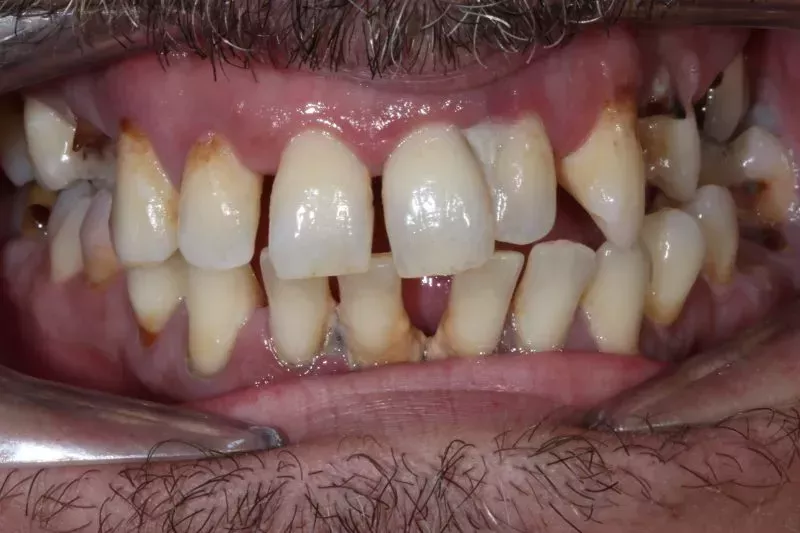
Before & After – Dental Implants
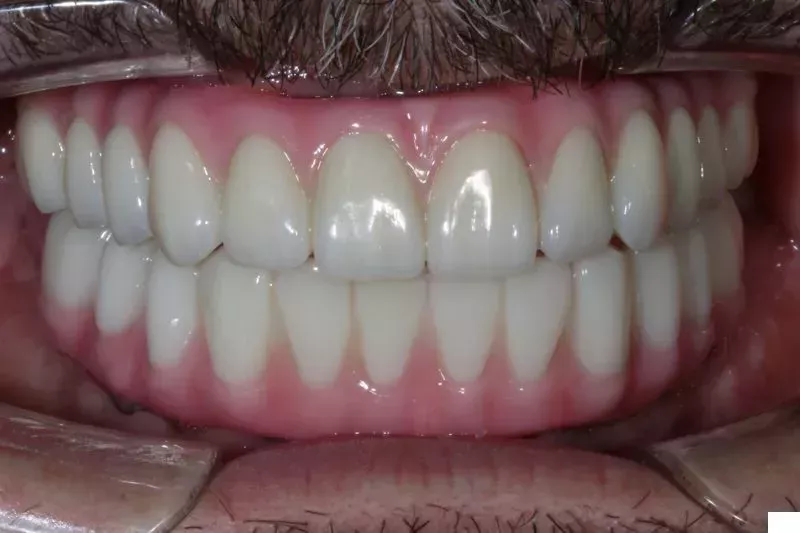
Before & After – Dental Implants
Contact Our Team Today
Whether you are interested in dental implants, teeth straightening, or any of our treatments, complete the short form below. Our team will get back to you promptly to discuss your smile goals and arrange a private consultation at a time that suits you.
TKC Dental are experts in dental implants and periodontics treatments such as bone grafts. With interest-free payment options to help make treatment accessible. Enquire today and our team will provide honest, personalised guidance with no obligation.