
Can You Have Veneers With Gum Disease? UK Dentist’s Guide

If you have gum disease and are wondering whether veneers are still possible, the short answer is yes, but only after the gum disease is treated.
Veneers rely on a healthy stable gumline to bond properly and last. Active gum disease undermines that foundation in several specific ways, so the standard pathway is to treat the gums first, allow the tissue to heal, and then plan the cosmetic work once your gums are stable.
This guide explains why the order matters, the five-stage treatment pathway from gum disease to veneer-ready gums, what the combined UK cost looks like, the typical timeline, and the distinction between active gum disease and stable receding gums.
Can You Have Veneers With Gum Disease?
No. Veneers cannot be placed while active gum disease is present. Veneers rely on a healthy stable gumline to bond properly, sit flush against the tooth, and last for the long term. Active inflammation, bleeding, or recession will undermine the result.
This does not mean veneers are off the table. It means the order has to be right. Your dentist will first treat the gum disease, allow the tissue to heal, and then assess whether your gums are stable enough for cosmetic work. Most patients who follow a proper gum treatment plan are able to proceed with veneers afterwards.
The terms that matter are “active” versus “treated and stable”. Active gum disease means ongoing inflammation, bleeding gums, deep pockets, or progressing recession. Treated and stable means the disease has been resolved, your gums no longer bleed, and the pocket depths have returned to a healthy range. Per the General Dental Council standards, all dentists are required to assess your overall oral health before planning any cosmetic treatment.
How Gum Disease Affects Veneer Outcomes
Placing veneers on teeth with untreated gum disease creates predictable problems, each of which shortens the result’s lifespan.
Bonding failure at the gumline. If the gum at the veneer margin is inflamed or bleeding, your dentist cannot achieve a clean dry surface for bonding. The result is a poor seal that lets bacteria track underneath.
Recession exposing the veneer edge. Gum disease pulls tissue back from the tooth. If this happens after placement, the dark underlying tooth margin becomes visible above the veneer and the aesthetic result is compromised.
Ongoing infection beneath the restoration. Untreated bacteria do not stop when a veneer is bonded over the top. Infection continues, increases tooth loss risk, and threatens both the veneer and the underlying tooth.
Premature veneer failure. High-quality porcelain veneers fail early if the gum foundation is unstable, shortening what should be a 15 to 25 year investment to a fraction of that lifespan.
Helpful Tip: Gum tissue must be stable for any cosmetic dentistry to last. Doing the gum work first costs far less than replacing failed veneers later.
Treating Gum Disease Before Veneers
The standard pathway from gum disease to veneer-ready gums follows five stages, each with a specific purpose.
Stage 1: Hygiene appointment and full assessment. Your dentist or hygienist will measure pocket depth around every tooth, check for bleeding, and take any necessary X-rays. This establishes severity and informs the treatment plan.
Stage 2: Non-surgical periodontal therapy. For mild to moderate cases, deep cleaning below the gumline (root planing and scaling) removes the bacterial plaque and tartar driving the inflammation. Sessions are typically split per quadrant of the mouth.
Stage 3: Periodontal surgery (only if severe). If pocket depths remain deep after non-surgical therapy, surgical options become relevant. These include flap surgery, pocket reduction, or laser-assisted techniques.
Stage 4: Healing and reassessment. Gum tissue needs 6 to 12 weeks to heal and respond. A reassessment confirms whether the disease is resolved and the gums are stable.
Stage 5: Veneer planning. Once your gums are stable, veneer planning begins. Your dentist evaluates your suitability for laminate or traditional veneers, takes impressions, and works with the ceramist on a custom plan. For full detail on the gum disease side of this pathway, see our gum disease treatment guide.
Expert Tip: Always ask your dentist to share the pocket-depth chart from your assessment. Numbers under 3 mm indicate healthy gums; readings between 4-5 mm signal early disease; 6 mm and above is moderate to severe.
Cost of Gum Disease Treatment Plus Veneers (UK Prices)
The combined UK cost depends on gum disease severity and how many veneers you decide to have. Typical UK price ranges per stage are shown below.
| Treatment stage | Typical UK price range |
|---|---|
| Periodontal consultation | £100 – £250 |
| Non-surgical periodontal therapy | £400 – £900 |
| Periodontal surgery (if needed) | £800 – £2,500 |
| Porcelain Veneers (per tooth) | £900 – £1,500 |
For mild to moderate gum disease, the total investment ranges from roughly £1,500 (gum treatment alone) to £5,000+ if extensive veneer work follows.
At our clinic, periodontist consultation with our specialist is priced at £190. Non-surgical periodontal therapy starts from £650. We also offer 0% finance to spread the combined cost interest-free.
A consultation will give you a personalised plan from a periodontist and cosmetic dentist under one roof.
How Long Until You Can Get Veneers After Gum Treatment?
The typical timeline from starting gum treatment to veneer placement is 3 to 6 months. The exact figure depends on how advanced the gum disease was at the start and how your tissue responds to treatment.
Mild to moderate cases that respond well to non-surgical therapy can often progress to veneer planning at the 3-month reassessment mark. More advanced cases that require surgical intervention may need 6 months or longer before the gums are stable enough to consider cosmetic work.
For patients researching whether they can have veneers with gum disease, the healing phase is not wasted time. Allowing the gum tissue to settle fully means your veneers will sit at the correct gumline position from day one, with a clean healthy margin that will hold up over the long term. A pre-treatment timeline conversation at the consultation will give you a realistic schedule, so you can plan around work or personal events while the gum treatment runs its course.
Helpful Tip: If you have a major event coming up, start the conversation with your dentist 6 to 9 months ahead. Rushing this pathway causes most veneer failures.
Can You Have Veneers With Receding Gums?
Receding gums are slightly different from active gum disease. Recession refers to gum tissue that has pulled away from the tooth, exposing more of the root. It can be a consequence of past gum disease, hard brushing, or genetics. A 2023 PMC review of receding gum aetiology confirms that recession can be stable for many years without any active disease present.
If the recession is stable and the gums are healthy, veneers can usually be placed. Your dentist will design the veneer margin carefully to avoid creating a visible step at the gumline, and may recommend a slightly longer veneer to blend with the receded position.
If the recession is severe or ongoing, your dentist may recommend a gum graft before veneer placement, particularly for front teeth where aesthetics matter most. The distinction is active disease (must be treated first) versus stable recession (may be workable as is). Your dentist will tell you which category you fall into at the assessment.
Gum Disease & Veneers in London: TKC Dental
TKC Dental is one of the few London practices that brings together both a Specialist Periodontist and a Master Veneer Ceramist under one roof.
Dr Sulaman Anwar leads our periodontology service, handling everything from non-surgical therapy through to advanced procedures including the Chao Pinhole technique and Waterlase laser-assisted treatment. Once your gums are stable, Craig Galbraith hand-crafts your veneers in feldspathic porcelain at his accredited California laboratory. He is one of only 37 Master Ceramists accredited by the American Academy of Cosmetic Dentistry (AACD).
Treating the gum disease and placing the veneers within one practice means continuity of care: the periodontist and cosmetic team review your case together, and you avoid being passed between separate clinics.
We offer 0% finance and a dental membership plan, and our primary veneer offering is no-prep porcelain veneers at £1,200 per tooth. For a fuller overview, read our comprehensive no-prep veneers guide.
Frequently Asked Questions – Veneers With Gum Disease
Below we answer the most common questions about veneers with gum disease. If your question is not covered, get in touch with our clinic team.
Veneers After Gum Disease: What to Remember
A veneer is only as stable as the gum tissue around it, which is why treating the disease, allowing the gums to heal, and then planning the cosmetic work is the difference between a result that lasts decades and one that fails within years.
The five things to take away from this guide:
- Order matters: active gum disease must be treated before veneers can be placed
- Typical timeline: 3 to 6 months from start of gum treatment to veneer planning
- Combined UK cost range: roughly £1,500 to £15,000+ depending on case complexity
- One-roof care importance: TKC has a Specialist Periodontist and a Master Veneers Ceramist in-house
- Stable recession is different: stable receding gums may not need treatment before veneers
The right next step is a consultation covering both sides of your case together, so you receive one clear plan, one combined cost, and one team responsible for the result.
Book Your Consultation with TKC Dental
Book a private consultation at our Kensington or Knightsbridge clinic. The appointment will include a full periodontal assessment by Dr Sulaman Anwar, a cosmetic review by Dr Sheraz Aleem and the wider team, and a clear treatment plan with itemised costs for both stages.
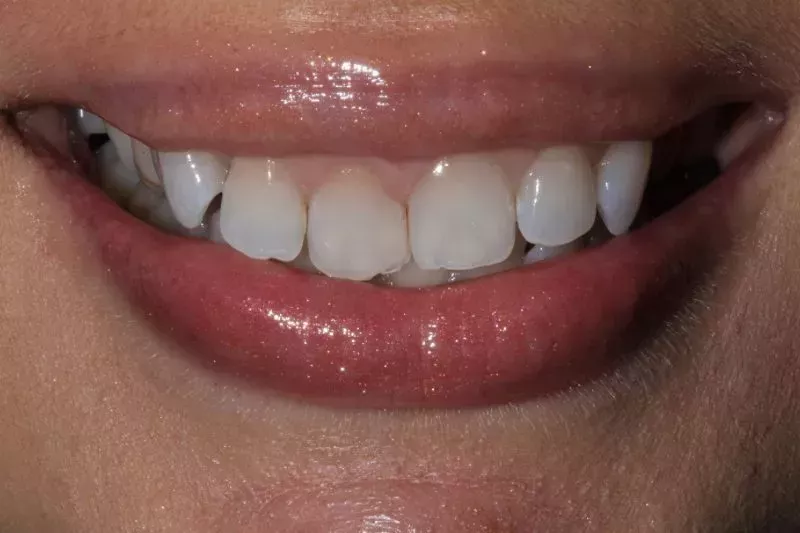
Before – Porcelain Veneers
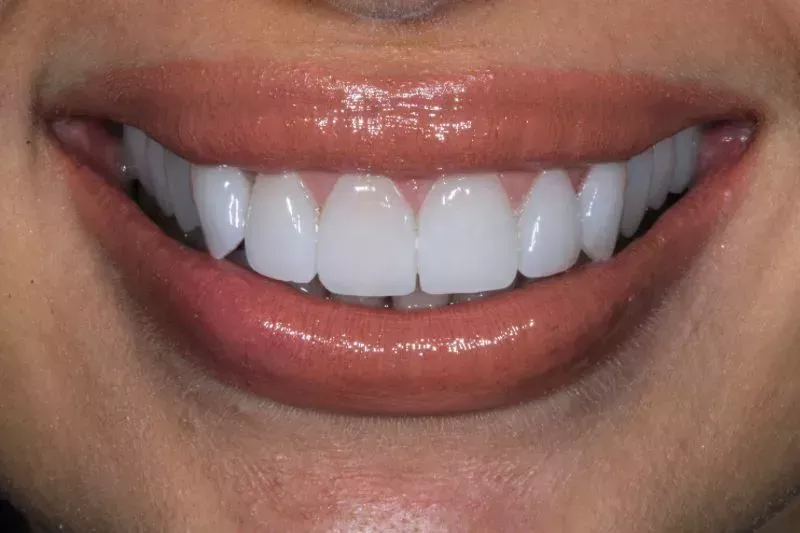
After – Porcelain Veneers
Contact Our Team Today
Whether you’re dealing with gum problems, thinking about veneers, or both, complete the short form below. Our team will get back to you promptly to talk through your concerns and arrange a private consultation at a time that suits you.
TKC Dental combine specialist periodontics with cosmetic expertise, so we can care for the health of your gums and the look of your smile together. With interest-free payment options to help make treatment accessible, you can enquire today and our team will provide honest, personalised guidance with no obligation.